
 When you’re starting to drown between employee concerns, payroll duties and helping your CEO -- HR Insider is there to help get the logistical work out of the way.

Unlike standard confined spaces, “hazardous confined spaces” (as they’re called in some jurisdictions) are dangerous to enter or maybe even be around. Here’s what to do if you discover that a confined space in your workplace is a hazardous confined space.
1. Secure Entry to Hazardous Confined Space
Secure the entrance to the space so that people can’t get inside unless you want them to. Acceptable methods include the use of physical barriers, locks, warning devices, or a combination. Specify the methods you use to secure the entrance in your confined spaces entry program.
2. Notify Workers of Hazardous Confined Spaces
Notify workers of the presence, location, and dangers posed by any hazardous confined spaces at your workplace either by posting danger signs with language like the following:
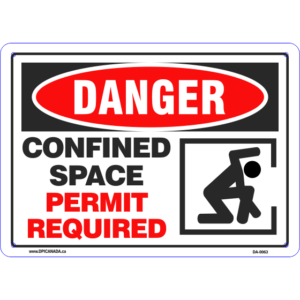
OR by communicating the information using another equally effective means.
3. Choose between No Entry & Limited Entry
Make a fundamental decision about what to do going forward to minimize the risk of serious or fatal injury to workers inside the confined space:
- Option 1: Eliminate the danger completely by sealing off the space so that nobody can enter it.
- Option 2: If permanently sealing off the space isn’t reasonably practicable and the space must be entered, use remote technology to perform the necessary work, such as by using artificial intelligence technology or drones rather than workers to inspect the space.
- Option 3: If eliminating the need for human entry isn’t reasonably practicable, implement a confined spaces entry policy to ensure safe entry into the space.
Among other things, the confined spaces entry program must explain the atmospheric testing, equipment, training, attendant personnel, emergency rescue, and other steps required to ensure safe entry to, work inside, and exit from the space.
4. Notify Contractor of Confined Space Hazards at Your Site
Notify contractors and subcontractors that you invite to your site that your workplace contains hazardous confined spaces, especially if their workers propose to work in the vicinity of or enter those spaces. Specify the locations of the hazardous spaces and the hazards they pose. Give and require the contractor to review your hazardous confined spaces entry program; get and review the contractor’s own confined space entry safety protocols.
5. Coordinate Confined Space Safety Measures
Determine which safety measures will apply to the confined space entry work the contractor undertakes. Don’t agree to let the contractor follow its own protocols unless and until you verify that the contractor’s protocols:
- Are appropriate for the hazards those confined spaces pose.
- Are suitable for the operations to be carried out inside those spaces.
- Provide workers protection that’s at least equivalent to your own hazardous confined space safe entry program.
If the contractor’s proposed protocols don’t meet these criteria, require it to follow your own entry program with whatever adjustments you determine are necessary to ensure workers’ safety. Finally, ensure that the contractor thoroughly debriefs you after each entry operation of any hazards encountered so that you can adjust your own entry program accordingly.


